


We want a sustainable future, which is why we are seriously committed to reusing the energy we generate, allowing us to substantially reduce energy consumption.
2025
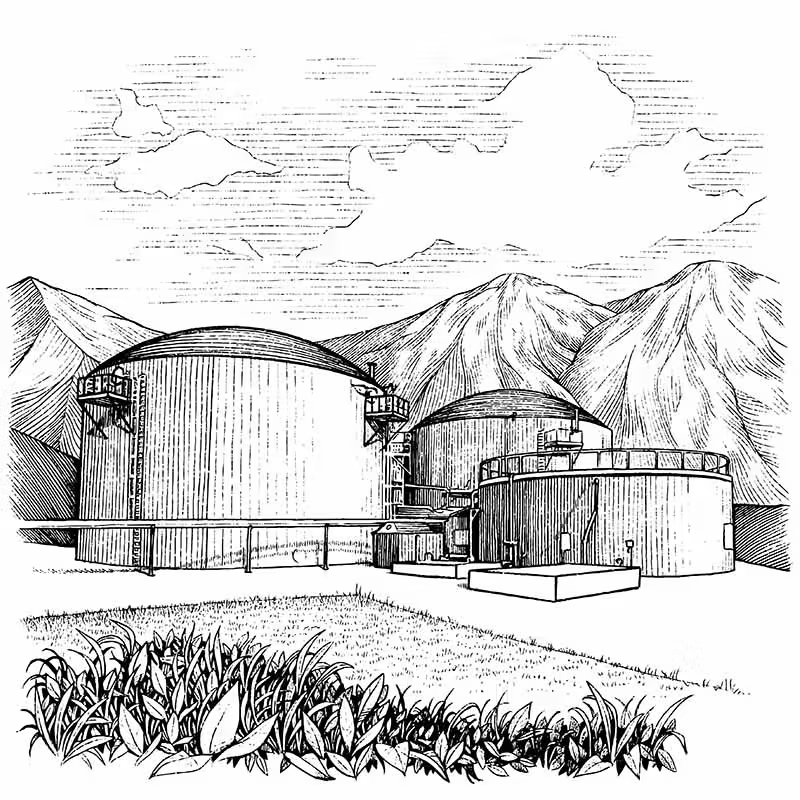
In 2025, we launched the methanization plant, which operates through the treatment of waste generated in our industry.
2022
METHANIZATION PLANT
In 2022, the construction of the industrial methanization plant began. This was the result of 9 years of testing and trials that allowed us to perfect and improve the use of our company’s wastewater sludge as a sustainable fuel.
2021
BIOMASS BOILER
In mid-2021, the biomass boiler came into operation, burning a mix of pig hair and wood chips. In the first few months of operation, we achieved a 7% reduction in annual natural gas consumption compared to 2020, indicating a potential total annual reduction of 15%, thus avoiding the emission of 497 tons of CO₂ annually.
2019
PigHeat Project
At Grup d’Avinyó, we installed the first industrial plant for the PigHeat project, in collaboration with the R&D department of Bigas Alsina, SA. This pioneering project in the sector mixes pig hair from the slaughterhouse with wood chips to create biofuel, minimize waste production, and generate part of the energy we consume.
2017
Catalana de Embutidos received an energy efficiency certification with the help of the Institute for the Diversification and Saving of Energy, through the European Regional Development Fund.
2016
We installed a pilot biometanization plant at the company to test laboratory results under more realistic conditions. This process was key to moving from the laboratory phase to industrial-scale implementation.
2014
At Grup d’Avinyó, we began laboratory tests to biometanize our company’s organic waste to produce biogas. This project was done in collaboration with the AINIA technology center and the company Frontera Tècnica. In this first phase, the suitability of organic waste for anaerobic digestion and the biogas produced was tested.
2011
We received a grant from the Institut Català d’Energia to install a heat recovery system within our production process. This allows us to save energy by using the heat generated from burning hair residues.
1990
We installed a heat recovery system in our by-products plant that harnesses the heat from the digestion process to heat water, thus reducing our gas consumption.